For this 121 redispatch discussion, let’s look at a B767-300ERW EDDM-KDFW. For this example, due to the min-time routing today, we’ll plan a redispatch into KMSP, with KRST as the alternate for KMSP. The concept of redispatch exists nowhere in a plain reading of the regs, but in a special authorization called B044 - Planned Redispatch or Re-Release Enroute. If an operator does not hold B044 in their OpSpecs, they cant do it. Being an international 121 dispatcher, I have no idea how redispatch works for my EASA colleagues.
On the dispatch release, the initial destination and alternate (KMSP/KRST) are listed first, as until you get to the redispatch waypoint (TADIS), the plan is for you to land in KMSP, but your ATC plan is filed for KDFW, more on that later. As my own techcedure, I always remark how my flight is crossing the NAT, whether a random, a track, is PBCS required; if a track what is the TMI, and so on.

The top of the OFP is a repeat of the data from the release, the vertical profile, ETEs and so on.

The top fuel ladder is EDDM-KDFW with alternate NONE. Note the fuel summation is PLANNED, for until the flight gets to the redispatch fix, this is just fuel fuel plan.
You’ll also note on the bottom fuel ladder is the fuel from EDDM to KMSP with full 10% flag reserves. That sum is the required fuel at brake release at EDDM, that is why the fuel at the top ladder (to KMSP) is labeled as PLANNED. The box MINIMUM REDISPATCH FUEL REQUIRED is the sum of the TADIS-KDFW fuels and everything below it from the top fuel ladder (21.8 + 2.2 + 3.9 + 0.3 = 28.3). The numbers are rounded in this format, but are never more than 100 lbs off.

ATC also needs to be aware you are conducting a redispatch. The RIF/ statement is for that purpose. So if the crew requests landing short at KMSP over TADIS, ATC knows what they’ll request.
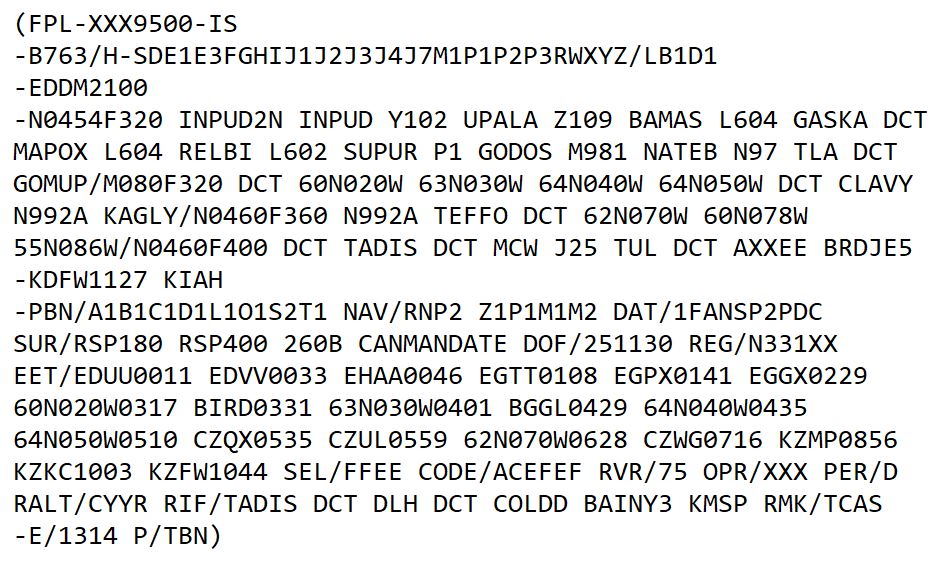
Once the flight is airborne, and after the ACARS starts to send position reports and I can start to track their actual fuel use, and once the flight is within 2 hrs of the redispatch fix, my relief will issue the redispatch release, whether via ACARS, HF, or whatever. Dispatch will uplink the RDC with all the updated news weather and sports for the destination and alternate, then the crew will respond with an ACARS “RDA” which means redispatch accepted, or RDU which means the redispatch is unacceptable.
On this new release, I have to be careful as this is a completely new release, so if an alternate is now required, where one wasn’t 12 hours ago, unless I have the gas to add an alternate, we’re landing short for hopefully a gas-an-go. There are things I can do to make up fuel, like direct the crew to slow to CI-0, take a direct, shorten or remove an alternate if I had one and don’t need one now. In this example, the crew is estimating within 2 hours overhead TADIS we’ll have 33.2 onboard at TADIS, but the min required to continue 28.3

Other things to be aware of is you may not be planned to bust landing weight at the initial destination, KMSP in this example. That is why the OFP displays the RDSP LWT.